My first show of 2020 went to Wicked. This was the sixth time I have seen it live: hearing “As Long As You’re Mine” once is worth the ticket, never mind a design so grand that a hundred viewings would not be too many. Every visit brings something new.
The ballI will be awkward with you
When Glinda joins Elphaba in that awkward dance, I was more moved than ever. There is a kind of company that says: I will be awkward with you. If they are going to laugh at you, let them laugh at me too, and at least I can carry half of it. In the choreography Fiyero ends up joining in the awkward moves as well, a lovely detail.
The dancing in “Dancing Through Life” rewards close attention: every move is tied to the lyric, and there is a strong sense of story. At one point Fiyero clearly altered a note of his own accord (it is hard to describe; you have to hear it). Over the evening both he and Elphaba proved fond of doing this. For someone who knows the score as well as I do, these small variations are a real pleasure, like the way Ramin Karimloo shapes the end of one particular line in the title song of The Phantom of the Opera.
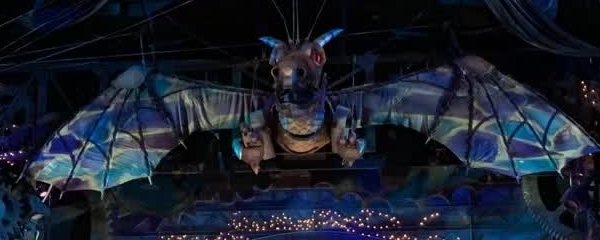
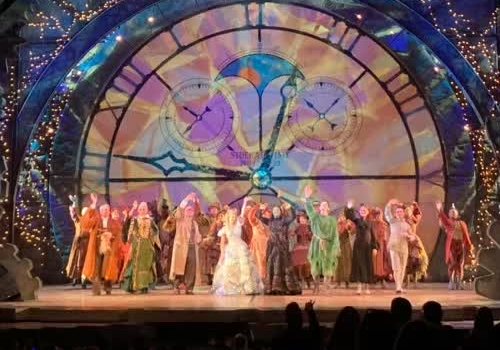
The castThe intensity of Nessarose
Glinda’s first song was very unsteady, as if the voice had not opened up, with no shine at the top. She improved afterwards, and by the end it was clear that the first number had simply been an off moment.
The Wizard’s tone deserves praise. The song he sings at his second meeting with Elphaba already carries a hint of the “green elixir” melody, which works as a further clue. I like this kind of step-by-step design.
Nessarose was superbly acted, with real intensity, and I loved her. The character is well conceived to begin with, but the show gives her limited space, so to see this much made of her was a delightful surprise. What Nessarose conveys is that desire has no end, and that some people push every difficulty on to others and never look at themselves. She has probably been spoiled by her father the Governor, on top of years of unresolved insecurity. Glinda was very well acted too, though every Glinda I have seen has been, each in her own way.
PlotDoes she really never do good again?
In the plot, the Wizard and Elphaba are on the verge of making peace when Doctor Dillamond appears, and that turning point is very well placed. Fiyero’s capture, which finally enrages Elphaba, is another. But does she really, as she sings, never do good again? Not necessarily. She is expressing a feeling, and she does nothing truly wicked afterwards. Even when she locks the girl up, all she says is that if she wants to go home to her mother, she had better take off the shoes.
Earlier, Elphaba is ashamed of her strange colour. Once Fiyero has become the Scarecrow, their two “imperfections” cancel out in plain sight, and they are equals. Perhaps that is something of what love really is.
I still do not understand, of course, why Fiyero was ever with Glinda. Youthful inexperience, perhaps? My heart goes out to Glinda, even though she does not begin with a heart as beautiful as Elphaba’s.
FriendshipThe best-drawn thing in the show
The friendship between Glinda and Elphaba is the best-drawn thing in the show. Even as rivals in love they remain each other’s support; they may be angry, they may fight, but it all comes to rest in “For Good”. No relationship in the world is perfect, and that is what makes this one truer and more moving. Glinda’s influence on Elphaba is more hidden. What the show brings out is Elphaba’s help to Glinda and her influence on her, which is why my earlier review started from Glinda’s growth. In principle Glinda could help Elphaba out of her shyness, but the show spends little time on it; Elphaba does at least learn to accept herself more calmly. If the influence were shown more fully in both directions, “For Good” might move us even more.
No relationship in the world is perfect, and that is what makes this one truer and more moving.
DetailsGreen glasses, and a glance from the bridge
Only yesterday did I work out why Elphaba says in “One Short Day” that she loves it here, and that here she is no different from anyone else: everyone in the Emerald City wears green glasses and sees everything as green, so Elphaba no longer looks strange. It probably has something to do with the Wizard’s green bottle as well.
On the subject of the Wizard: fairy tales mostly end with good and evil getting what they deserve, with much happiness and little regret, and Wicked is no exception. The one thing that breaks the pattern is that Elphaba and the Wizard never acknowledge each other. Father and daughter end as strangers, and it is hard to think of it without a pang.
There are other details that move me. While Elphaba sings “I’m Not That Girl” in the rain beneath the bridge (unrequited love always comes with rain), Fiyero and Glinda kiss goodbye above her, and then Fiyero leans out and looks down at Elphaba for a moment. And the flowers Fiyero gives Elphaba when he sees her off come from the field of flowers they fled to with the lion cub. It is all so carefully thought through.
Thoughts from this seat
- There is a kind of company that says: I will be awkward with you.
- No relationship in the world is perfect, and that is what makes this one truer and more moving.
- Their two “imperfections” cancel out, and they are equals.
 Tianjiao TanProducer and writer. Makes theatre, and sits in the audience for everyone else’s.About me →← All reviews