After Act OneForty minutes of set-up, and a romance without a spark
I came out of Act One dissatisfied. Forty minutes of set-up is far too long for what could be told in ten. The obligatory big opening number is fine in itself; but keeping the original “Nature Boy” and moving quickly into the can-can would have been fine too. It is a good song, with real flavour. As it is, presumably so as not to waste it, the song has been moved deep into Act Two and given to the hero’s friend. To hang the number that states the film’s theme on a side-plot about an old infatuation, invented for the stage, is too much. It spoils the song.
The casting of the heroine is a real problem. Whenever she danced, the two women behind her drew the eye more than she did; above all, there was no spark in her eyes, and by the end of the act not a flicker of love. At this point in the film the heroine’s love has barely broken ground either, but her heart is already engaged. It simply clashes with the values she has lived by, and she has not yet adjusted or accepted it, so there is a half-hidden desire and an inner struggle. With the spark on offer here, never mind love, even a passing attraction is hard to credit. The hero pours out his feelings with great effort, and nothing comes back.
Take the poetry in the bedroom. In the film there is an instant when she truly falls: while deceiving the man she deceives herself, and the audience too. On stage nobody seemed to be deceived at all, which turns the hero into a fool in love with his own idea.
To be clear, my objection is to the performance and nothing else. A newly written show such as & Juliet can cast as freely as it likes. This one has a film before it and a heroine of very particular allure, and whoever plays her has to deliver that.
Then the romance itself. The changes to the storyline are baffling too; I could not tell where the love was supposed to come from. That has everything to do with losing the hair-raising scene in the bedroom: two people who have been through danger together feel differently about each other. Its farcical theatricality has gone as well, and that was one of the best things in the film. A real pity.
This Duke is every bit as attractive as the hero. Whether that makes for a better set-up I do not know; I will see in Act Two.
The opening is certainly “musical theatre”, only far too drawn out. Introducing the Duke first is a good idea; watching the film, poor as I am with faces, I was confused at the start and took the writer for a rich man.
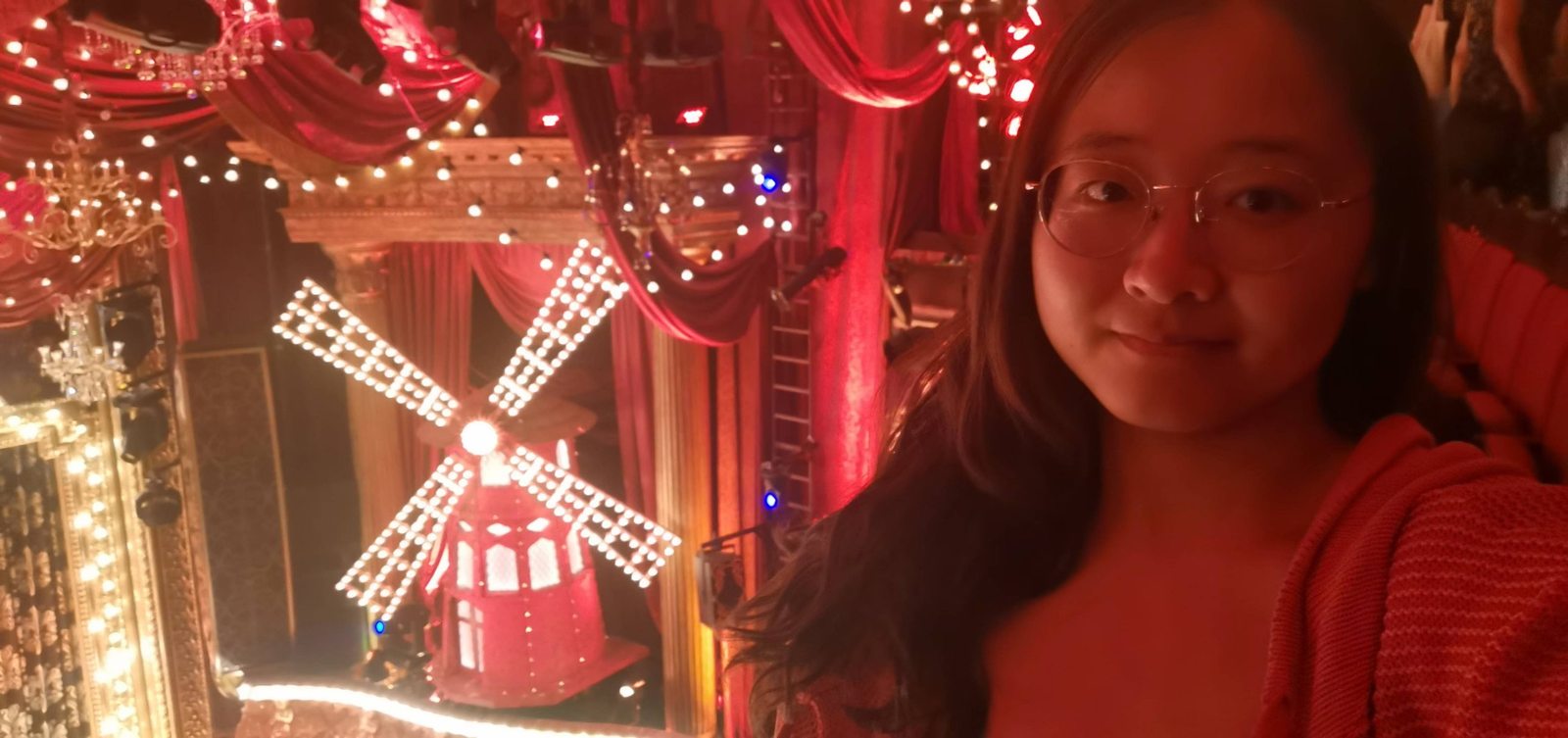
The theatre is splendid and full of Moulin Rouge atmosphere. The set is lavish and suits the world of the show.
After Act One, though, the stage version tastes quite different from the film. Their mood boards would be two entirely different things. In the film this opulent nightclub style is only the place where the story happens, the flavour of its period, not the flavour of the film itself. The stage version has made the two one and the same.
That is where I stood at the interval.
After Act TwoA grand, vulgar jukebox
From set and lighting to staging, the whole thing is very much in the manner of the big French musicals, but without the artful mystification and air of deeper meaning of their lyrics. So I am inclined to call it a grand, vulgar jukebox.
Musical theatre is popular culture to begin with, and there is nothing wrong with being popular. But vulgar is what I think it is, especially beside the film.
Musical theatre is popular culture to begin with, and there is nothing wrong with being popular. But vulgar is what I think it is.
The number of hits quoted seems to have roughly doubled; not even Carmen is spared. Call it marketing: it does little for the structure of the story and a great deal for the mood in the house. At the merchandise stand people were happily buying the cast recording, even though it is the American one.
Some people around me did cry, but I could not feel it; I never got inside this love story. The obstacles between the two are set up too simply, with none of the twists and turns of the 2001 film. Beyond the bare frame of the story, the stage version has kept nothing at all.
As for “Nature Boy”, which I mentioned at the interval, I cannot go along with how it is used. How can it be both a theme for the whole show (it opens Act Two and returns at another point I have forgotten) and the personal theme of that one character (the tune arrives the moment he appears to talk to the heroine)?
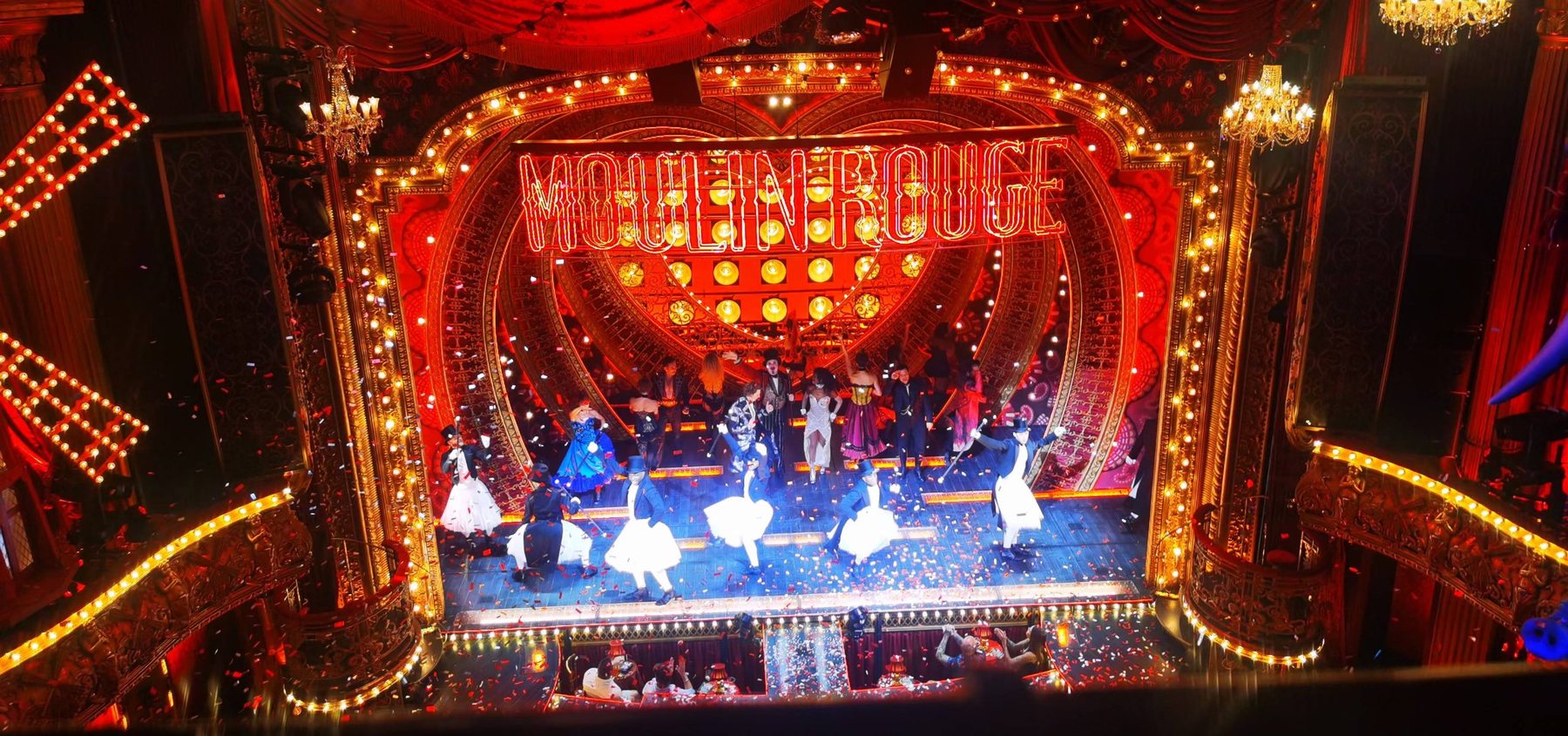
I gather the heroine I saw was an alternate. If I could not feel for the pair, the adaptation is partly to blame and so is her performance. Only her singing was passable, and the style is odd. In her first duet with the hero, “Come What May”, apart from the last line, which pulled things together a little, their two utterly different ways of singing kept the voices from blending at all, and it was uncomfortable to listen to. Normally the first notes of that tune make my nose prickle, because of the film; the moment she began, the tears were gone. The over-elaborate song and dance is to blame as well. The impression is that every gap must be filled with a hit, and every gap must have a noisy production number.
The characters are drawn without major problems, except that the inner complexity of the two leads has been thinned out. The secondary characters, led by the Duke and the proprietor, are nicely filled in, and I liked the dancers standing by one another as sisters. This Duke is a little stock: he has become a chauvinist who demands that his woman give up the stage, which takes one more weight (support for her career) off his side of the scales in her first reckoning. “I have not long to live” is, on its own, far too thin. And she learns very early that she is dying, which drains away much of the drama.
In short, a great disappointment. The bohemian spirit does not come through strongly either. A few slogans are shouted, and that is all.
Thoughts from this seat
- Musical theatre is popular culture to begin with, and there is nothing wrong with being popular.
- The mood boards of the stage version and the film would be two entirely different things.
- Beyond the bare frame of the story, nothing at all is left.
 Tianjiao TanProducer and writer. Makes theatre, and sits in the audience for everyone else’s.About me →← All reviews