Today I went to see a show made by old friends. I met its four creators on a production of my own, and now they have come together again to make something new. It feels like this: the seed from back then flowered, the flower set seed, and that seed has fallen into the soil and flowered again.
What follows is written the way I write up every show I see, with no going easy because they are friends.
OverallWhat she set out to say, she said
Overall it exceeded my expectations. I already had a good impression from the blurb during the publicity period, because Peipei, as the writer, has something of her own to say. I came to see whether the publicity was true: did what she wanted to say come across? It did. And there is something else that is hard to achieve: the director will certainly have done her own second layer of creation, yet director and writer are pulling towards the same goal. That is exactly what I failed to achieve on my last show, so: well done!
Don’t underestimate what I mean by “saying what you want to say”. I think it is the core of making art. It is not saying just anything; it is that someone has taken in the world and then passes on a share of empathy, stirs feeling, reveals something, carries some meaning, gives you an experience. That is the most precious thing.
“Saying what you want to say” is the core of making art.
So in that sense this is an excellent piece and a valuable one, which is the rarest thing of all and something a great many shows never manage. With that in place, the hard measures: this is a small production; in production terms it is at the level of an ordinary student show, while in content it goes beyond one (they tend to talk about a bit of everything, and what they want to say never takes shape). It has potential, meaning that with continued work it can become steadily more competitive. If it were handed to me, I would be willing to produce a second run.
ContentThe sore points of staying in Britain, and one line
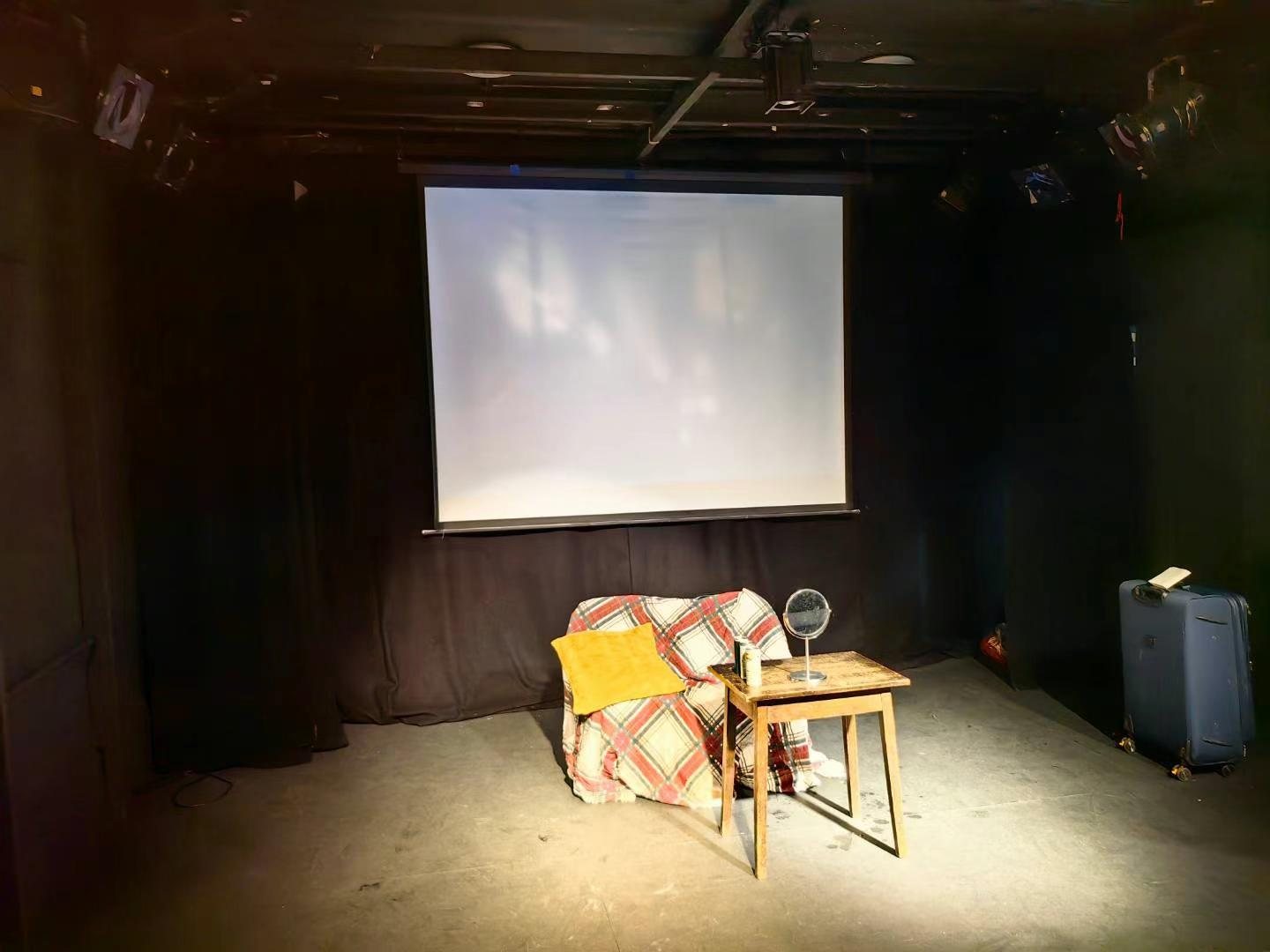
On to the content. It is a one-woman show about the difficulties of a Chinese student trying to stay in the UK, and it catches many of the sore points: finding a room, racism, visa applications, job hunting. Those of us working hard to stay here will find it easy to recognise ourselves; in the passage about being given a hard time over renting, my tears were about to fall. If it were mine, though, with a performer who can switch freely between Chinese and English, I would do a few performances in Chinese, aim squarely at Chinese people staying in the UK, dig deeper for the tear-jerking moments in the script, and shamelessly take their tears.
Other things in it are common to everyone. What hit me hardest was the passage exploring why she dyes her hair every colour, and the line “I want to be seen.” The director’s control of rhythm is right: first a rapid fire of talking to herself, searching for the reason; then this one line, said lightly; then blackout, and the audience is left shaken.
Solo shows and comedy are natural partners, and the jokes in the script are rather good. “You don’t have many days left” is like a morbid joke made by a foreigner whose English is just as shaky; there were smaller laughs I can’t recall now, but I did laugh. There could be more of them, and bigger ones.
FormThe solo form, three dreams, and one-sided texts
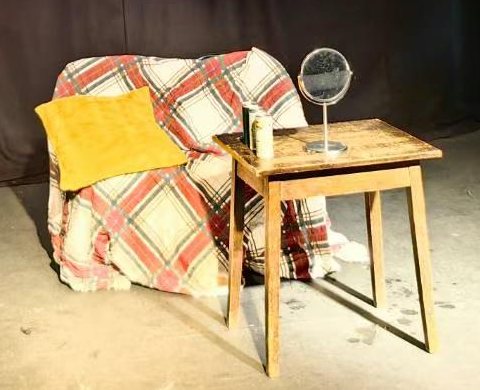
As a solo piece it works for more than eighty per cent of the time, but the exchanges with Fay deserve more thought. Sometimes I wanted that person actually to appear; my impression was that I could almost see Xiaoxi standing backstage reading Fay’s lines, and that is the wrong feeling to have. If the solo form is to stay, perhaps the dialogue can’t be kept every time. Sometimes reported speech would be better; or the performer could turn her back to the audience; or only half or part of the scene could be shown, by masking or lighting. Or don’t recreate the scene at all and have her simply tell the audience; and even when the scene is recreated, the language can be “I sat here, she sat there”, and then, without reporting, she plays Fay when Fay speaks. All of these are devices I have seen in other shows.
The three dreams are a little abstract; I only learned afterwards, by asking the creators, that all three were dreams. A few more signals would help, including a bigger shift in the lighting palette: blue and green, plus red as a warning (if needed, usually close to waking), are the colours I have seen used most in dream scenes.
The slides having too much text to finish reading is a small matter. So is this: only the other person’s texts appear, with nothing shown on her side, which feels slightly off. In every text-message scene I have seen in small theatres both sides send, and stage time roughly matches real time, so the back-and-forth has a tense rhythm. If I were designing it, I might keep her reactions to and comments on the incoming messages, and for her replies have her act the typing while the screen shows the words; that is the more realistic way. For something less realistic, exaggerate: let her write straight onto the big screen, or give the avatar on the screen an actual kick (in anger). At the end she could smash the phone, and cracks could fizz across the screen to hint at where things are heading with the man. There are other ways too, which I won’t list. What is there now is fine, only slightly off.
Performance and productionSeventy per cent relaxed, and marketing that fell short
I want to rave about Peipei’s performance: she didn’t train as an actor, and she does better than many students who did. On stage she is about seventy per cent relaxed; she has melted into the stage and is enjoying it. That state is more or less standard among foreign actors, while Chinese actors on the whole don’t manage it well; many hold themselves too stiffly. The one place that didn’t quite work for me was the dream near the end: circling the stage to opera with her arms reaching out, the reaching gestures weren’t fully there, and she seemed to tighten up again. Apart from that, really wonderful!
On the production side, there are only a handful of them, and yet things were essentially orderly and well run. Few as they are, every one of them is reliable and gets the work done. Marketing is where I think it fell short and could have been better: from the title to the positioning to the choice of audience, it simply wasn’t there, which is a pity. The house was below what I expected; for a pub theatre like this, around 60 per cent is the healthy level, and that depends on more publicity and more exposure.
That’s all.
Thoughts from this seat
- “Saying what you want to say” is the core of making art.
- Solo shows and comedy are natural partners.
- If it were handed to me, I would be willing to produce a second run.
 Tianjiao TanProducer and writer. Makes theatre, and sits in the audience for everyone else’s.About me →← All reviews