With Lloyd Webber you can always trust the music to be tuneful. The best tune, for me, is not Cinderella’s own theme. It is reprised at least three times, and she has grown a little at each return, but the melody is repeated so often that it is now lodged in my ears. My favourite is the love theme for the Prince and Cinderella, also reprised at least twice; if I had to name a song, it is first heard in “So Long”. I am very fond of “Far Too Late” as well. Lloyd Webber truly loves rock, though not from first bar to last, and the passage where the Godmother suddenly turns fierce struck me as abrupt, in feeling and in style alike. “Unfair” is tuneful too, and “Only You, Lonely You” is rather good.
The programmeA literature review of Cinderella
The programme essay on the history of the Cinderella story astonished me. It may be the fullest survey ever attempted, going all the way back to Greece in 7 BC, although apart from a shoe that version has little in common with Cinderella. The Chinese one, Yeh-hsien, I had honestly never heard of; I was surprised to see a Chinese name not spelt in standard pinyin, and wondered whether it was dialect.
AdaptationBreaking “marry and change your fate”
Reworking the classics is in fashion in Britain just now, and it is a direction that interests me. I do not know whether new writing in China could catch up with it even in ten years: it asks writers to move with the times and to find something genuinely new. If it were up to me, I would start with The Orphan of Zhao. (I am only half joking. Audiences do not usually step outside the story and ask awkward questions, such as why the orphan of the Zhao family should be worth more than Cheng Ying’s own child. It would be extremely hard to rework, but it is something I want to do.)
Back to this adaptation. The first task is to break the idea that a woman changes her fate by marrying, including the leap in class that the old story makes so much of. So this version makes Cinderella and the Prince childhood friends, more or less, and lets love begin before the ball. The programme calls the love in the fairy tale “sexual attraction”, which is putting it kindly. In the fairy tale Cinderella’s own feelings do not register at all. Nobody ever asks whether she is willing; she is simply disposed of, as if marrying a good husband were what everyone longs for.
Then, believing the Prince already married, Cinderella decides to travel the world (it reminded me of & Juliet; travelling the world seems to have become the badge of the independent woman), and asks in so many words why she should have to marry at all. The ending leaves out a wedding for Cinderella and the Prince, which is excellent.
A reservationBlaming the wish to be beautiful
This version also gives Cinderella a plot in which she trades her most treasured possession, the necklace her mother left her, for beauty (“Beauty Has a Price” is a good song). As a result not only her stepmother and stepsisters but the Prince himself fail to recognise her, and the Queen ends up choosing the dim stepsister as his bride. The plot lays the blame on a woman’s wish to be beautiful. The Prince does say she had no need to change her face, and in this story Cinderella does become beautiful to be worthy of him; but not only for that. She also wants to prove her stepmother and the rest wrong, even if a magic shortcut cannot really prove it. So if I were her and my partner told me I did not need to be beautiful, my answer would be: what has it to do with you? It made me strongly suspect a plot written from a male point of view, and yet the book is by a woman, Emerald Fennell.
The way a work conveys its values can be quite subtle. The trouble here is that Cinderella herself is full of remorse. She believes that wanting to be beautiful destroyed her love, and that it is all her fault; and when the Prince tells her she never needed to change, she is tearfully grateful (I exaggerate a little, but that is the gist). To me that is not, at bottom, feminist enough. I say so because I can plainly feel the show trying to be feminist, not because I insist on holding it to that standard. The business of the Godmother demanding the necklace and then returning it to the Prince is also hard to follow: the plotting is strained and the motive thin. Still, when the Prince finally gives the necklace back to Cinderella, the audience did feel a touch of romance.
The way a work conveys its values can be quite subtle.
Characters and castA faultless Stepmother and Queen
The scene in which the Prince’s brother turns up at the wedding is charming too. I found myself wondering when we will see two men kiss, simply and without fuss, on a stage in mainland China.
Of the two stepsisters I prefer Adele. But even with the added touch of her offering to work with Cinderella (an alliance I found far-fetched, since we never learn what Adele actually wants), the character is still not rounded.
Cinderella, the Stepmother and the Queen are all complete performers, and with the Stepmother and the Queen in particular I could not find a single fault. Ivano Turco, as the Prince, still has some way to go as an actor, I think, but his dancing is a joy to watch.
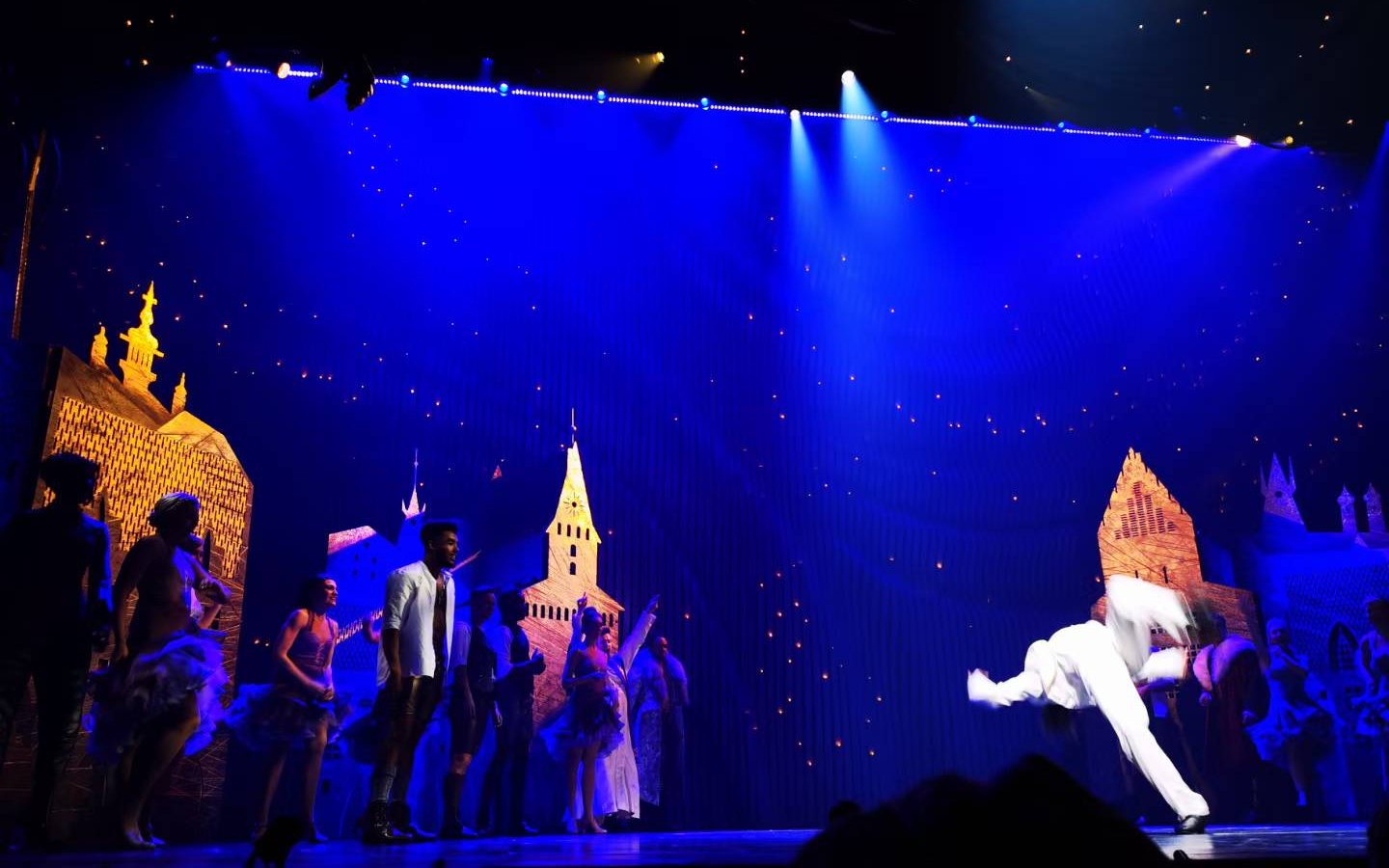
The women of the ensemble dance with terrific attack. Nobody lets the side down, everyone is fully engaged, and none of them is a “dancing machine”: fix your eye on any one of them and she will surprise you. The men are good to watch as well, and gave me the pleasure of a gaze that runs both ways. Their choreography is designed to please the women in the audience quite as much, and that being so, the women’s costumes no longer struck me as unequal.
The revolveI was sitting in the third ring
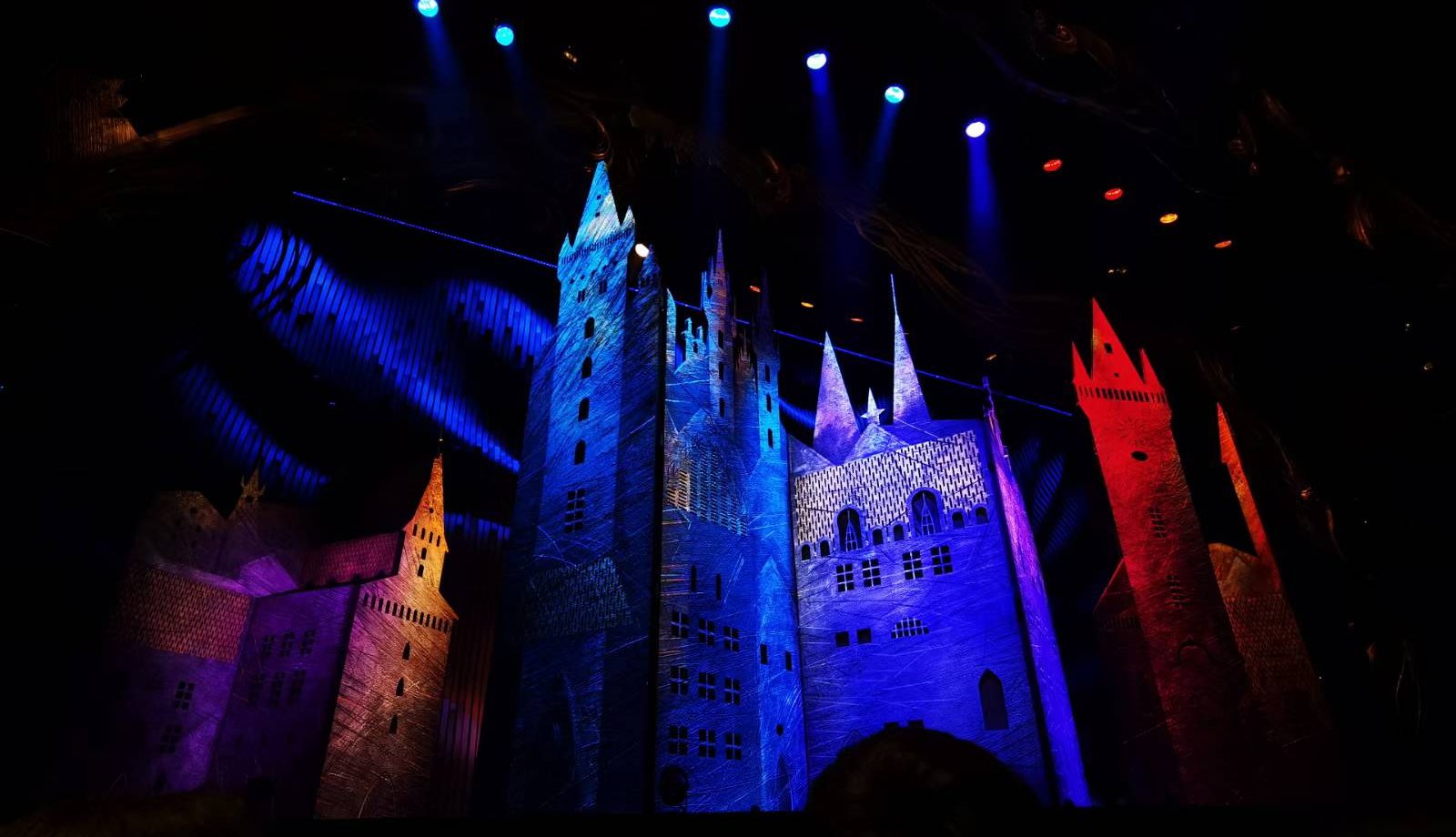
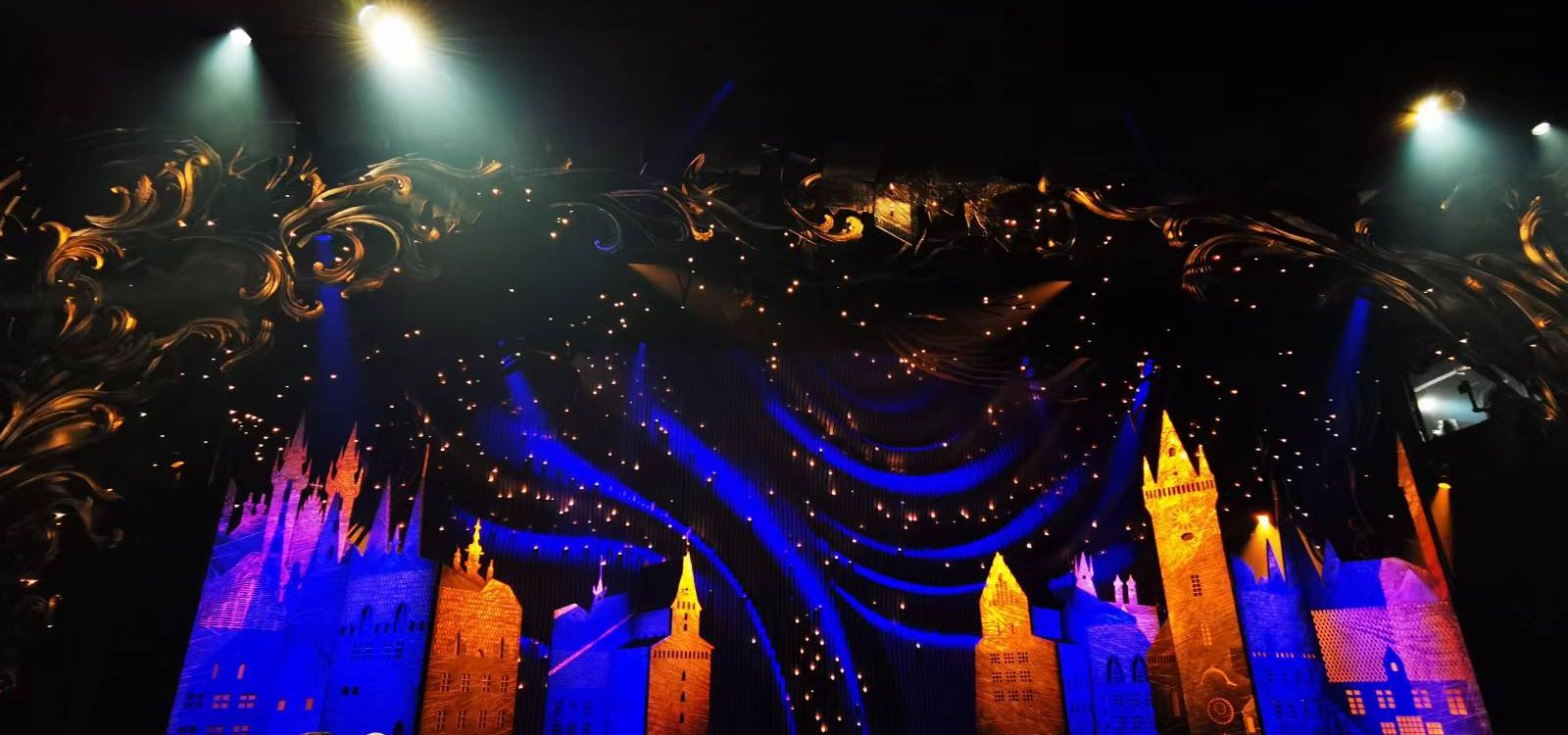
What I most want to praise is the revolving stage. I had meant to say that revolves with two concentric rings are in vogue these days; the ball at the top of Act Two changed my mind, because I felt myself moving. Yet the stage and I were still in relation to each other. I took it for some optical illusion and looked around: the front rows were turning with the stage, and I was sitting in the third concentric ring. My thought at that moment was: so much for that idea being mine. That is normal. Ideas in themselves are cheap. But standing on the shoulders of giants is actually harder than becoming one, because simply climbing up there takes so much effort.
To go on: we turned through a hundred and eighty degrees, and it was exhilarating. A great deal of haze is used so that the two halves of the audience cannot quite see each other. The direction is considerate. In a two-hander, one of the pair always faces the audience behind us; a solo scene is either played in profile to both sides or built around a lot of turning; and the ensemble dances on the outer ring, each dancer at right angles to the tangent where they stand. The wings have to be masked off completely with black drapes, with the scenery for other scenes stored behind them, so you never feel you have ended up in the wings. Having the set directly behind you is a curious sensation, though, and I was glad I had chosen this seat after all my hesitation. Only in the scene for the Prince and the men of the ensemble does the revolve quietly complete the other hundred and eighty degrees: the set has to change, and it cannot change until we are back.
Standing on the shoulders of giants is actually harder than becoming one, because simply climbing up there takes so much effort.
In Act One I was cramped in my seat. My neighbours on both sides sat expansively and kept shifting, and it was hard to concentrate. At the end I took no video, only a few quick photographs.
Thoughts from this seat
- In the fairy tale, nobody ever asks Cinderella whether she is willing.
- The way a work conveys its values can be quite subtle.
- Standing on the shoulders of giants is actually harder than becoming one.
 Tianjiao TanProducer and writer. Makes theatre, and sits in the audience for everyone else’s.About me →← All reviews