I had been looking forward to it, since opinion around me was divided. Having seen it, I do have a great deal to say.
First, as someone who has loved the stage show for years, I am not happy to see the story cut in two; it damages the whole. But after a while I could understand it. The plot of the stage Wicked is very tight, and some of the fast handling that makes sense in a theatre would meet a less forgiving audience on screen. On this score I think the film gets it right about four fifths of the time, with the two exceptions below.
Two criticismsCatching the train, and a “Defying Gravity” broken into pieces
The first is the dash for the train to the Emerald City. The film has Elphaba decide only at the last moment to invite Glinda along, after reading her sincere good wishes; but that motive is not much stronger than the stage version’s, in which Glinda is moping over a man’s baffling coolness. It merely washes out most of Glinda’s boy-mad side. As a matter of character, of course I like the film’s Glinda, who has her mind on her own career (when the headmistress seeks her out at the dance she sends Fiyero off at once, entirely clear-headed). As a matter of dramatic writing, though, there was no need to take away a trait that made her so vivid and endearing.
A different moment seems to me the better opening. Elphaba has just boarded, everyone on the platform is wishing her well, and in Glinda’s sincere good wishes there is a trace of regret and envy. (The performance is rich and finely layered; she may be known as a singer, but the acting here is outstanding.) An invitation at that instant would be fully motivated.
The second is Elphaba’s escape at the end. The stage version already stretches it to the limit; the film breaks “Defying Gravity” into fragments. Mix too much plot into the rising emotion of the music and the air goes out of it, and picking the song up again can only feel abrupt. It does the number real harm. More to the point, the added plot is not especially necessary. It may be there to strengthen the Wizard’s storyline, with the balloon as an important thread; but the two of them flee through two rooms doing essentially the same thing, with almost no build in feeling, and I can only call that padding.
That Elphaba cannot fly at first is something the stage version handles hastily (it suddenly just works), so expanding it in the film is entirely reasonable. But the core is unchanged: the broom still comes to her of its own accord just as she is about to give up. Her long fall after she jumps is therefore a repetition. The broom has already come to find her, and the magic still has not taken effect? It does not quite make sense, and to make it do so would need more logic supplied.
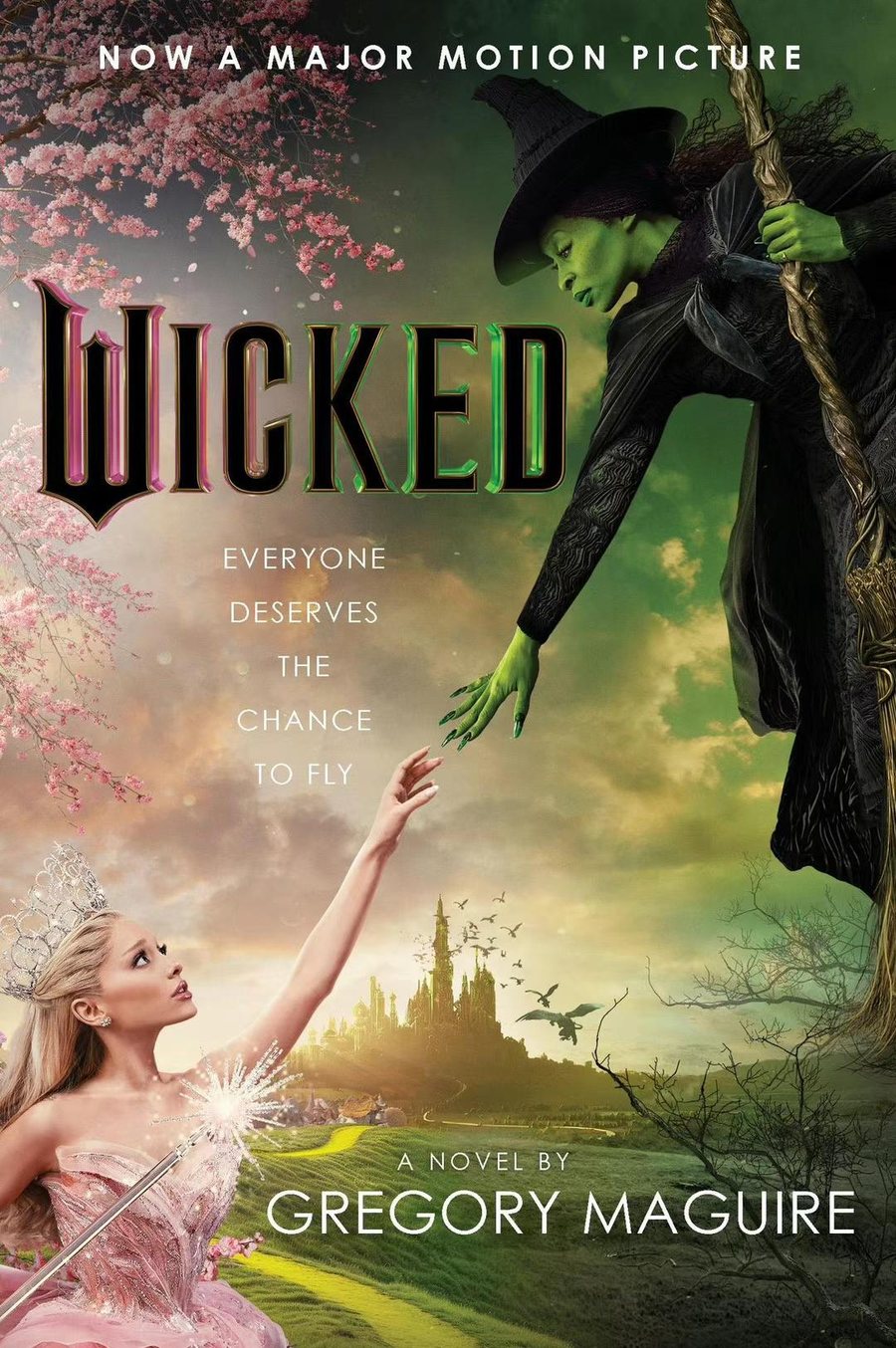
Then she sees her childhood self slowly reach out a hand to her present self, and she flies; that makes no sense at all. Bringing in her family background is a very good idea, but the childhood scenes are nowhere near enough to motivate the ascent here, and they leave Elphaba’s inner life somewhat muddled: you do not really know what she is thinking as she soars. Is it the way other people look at her? (The childhood in the film is less about being denied a chance than about everyone treating her as a freak.) So if the child is to reach out at this point, the childhood scenes ought to show her without a chance, unable to act freely, and tie in with the line on the poster about a chance to fly.
The rest is praiseAbsorbing, even for someone who knows the show by heart
There is not, in truth, much to criticise, and the rest is all praise. Some who know the stage show find the film slow, because they already know how the plot goes and not much is new; for someone less familiar with the story, the spacing of the plot points is still within reason. Taken as a film on its own, though, what it has to say is a little thin, or not yet fully cooked (the second part is where more fuel goes on the fire).
I know Wicked well enough that when one line is spoken the next is already playing in my head, and I was absorbed all the same. What interests me is how it has been adapted: a longer running time must mean more detail, and I wanted to catch as much of it as I could. My one regret is not having brought a pen; there was a good deal I wanted to note down as I watched.
The openingEvery emotion on Glinda’s face
What won me over at once was the opening number. On stage Glinda is entirely the sweet innocent; if you have not been through the whole show and set the opening number beside the final scene, you find that her emotions do not quite join up. The film gives Glinda generous close-ups from the start. To praise the performance once more, it has so many layers: facing the crowd, a composure and a shared rejoicing that she is holding in place; the moment everyone is lost in their own celebration and nobody is watching her, a faint sadness shows through. And not only sadness, but something complicated: how she treasures and mourns this friendship, reluctance to let go, and gratitude. Knowing the whole ending, I could see in her face almost everything Glinda would feel. I loved it.
The dialogue has been adjusted too. I have always felt that when Glinda is asked whether the two of them were once friends, her hedging answer, that it depends on how you define a friend, goes against her character: it sounds like the girl she was at the beginning, not at all like the woman she is after everything that has happened. It is only because the opening number is followed by the flashback to their first days at school, where the vanity runs in a straight line, that the false note is hard to hear, especially for an audience that does not know the story. The film changes the line: she openly admits that they were indeed friends, and tells the old story without evasion.
The stage version has always had one flaw, though: if the flashback is Glinda’s telling, how can she know about the scenes between Elphaba and Fiyero? What should be Glinda’s first-person view ends up omniscient. I am curious to see how the film will deal with that in the end.
The danceMy favourite scene in Part One
The dance is handled with the same delicacy, and it is my favourite scene in Part One. The stage version is long already, and the film draws it out a little further. But that touching of fingertips: perhaps physical contact makes a connection of its own, and the instant they met it went straight through me. Here the lengthening works as a magnification, and I cried a great deal. Elphaba cries too, which is especially affecting; it is probably the first time in her life that anyone has treated her with such sincerity. The moment when Glinda excuses herself, leaves a bewildered Fiyero and walks towards Elphaba is wonderful. A friendship in which each goes to meet the other has begun.
Something else in the film moved me. At first everyone merely mocks Elphaba, and when Glinda joins in the dance her two friends are appalled; but Glinda uses her popularity to turn what is weird into a fashion, and in the end everybody is doing the strange dance. Influence of that kind is touching: she has not only the heart for it, she makes the effort, and it works. It is ironic too, of course. Many questions in this world have no model answer; wherever the wind blows, there the answer is.
Many questions in this world have no model answer; wherever the wind blows, there the answer is.
StorylinesThe headmistress, the sisters, and a romance that still does not add up
Another place where the plot has been worked on is the headmistress. She takes responsibility on the spot for the chaos Elphaba has caused, saying it was meant to help the new students adjust to life with magic, and everyone applauds. Even the guileless Glinda knows that Elphaba did it, so we may take it that everybody knows; but what authority says is the truth, and the irony goes up a notch. Once she has taken the blame, Elphaba naturally lowers her guard, and in many scenes that follow the headmistress shows her every kindness without a crack in the surface. I like this handling very much. Her embrace of Glinda at the end is full of meaning as well.
The sisters’ storyline gains some understanding between the two. The elder knows that the younger is independent and does not want people always helping her; and when the elder is humiliated on the first day of term, spoiling her sister’s fresh start, they have only a small quarrel and the younger is still close to her afterwards. On this showing, Part Two will have to work rather harder on the break between them. I look forward to it.
The romance, sadly, still does not make sense, and a touch of the face has been forced into the rescue of the lion cub. Since when is Elphaba so bold? What follows is “I’m Not That Girl”, a song of self-doubt, and yet she dares to keep her hand on his face for so long? How strong a feeling would have to build up to give her that much courage? And all they have done is rescue one lion together; has that single event built up so much? It is not very plausible. Opinions will differ.
This Fiyero really does flirt with everyone; his romance with Glinda, on the other hand, is more solidly built than on stage, where it is quite arbitrary. The film also brings out one detail: Fiyero, the centre of everyone’s attention, is interested enough in the eager Glinda, but Elphaba, who is unimpressed by him, has a mysterious pull of her own. The less attainable, the more desired.
The restFriendship, the Animals, pink and green, and the music
On the friendship, the delightful time the two spend in the Emerald City is lovely, and Glinda keeps encouraging Elphaba and urging her on when her courage fails; the scene of their parting is charged with feeling and well worth watching. Early on, when they are enemies, there is even something of the bully in Glinda. Of her two friends, Pfannee, played by Bowen Yang, is extremely funny and I loved the performance; the character has an eye for Fiyero as well.
As for the Animals, I like one addition: when her father rejects Elphaba, it is a bear nanny who brings her up, and who tells her that a father should not lay the blame on a child. No wonder she is closer to the Animals. And at last we see a living green baby, no longer a prop.
The palette of the whole film is beautiful; pink and green really do go together, down to the monkeys’ eye shadow, one pink and one green. In the music there is some extension, a little cutting and some new material. In the opening, during the tryst of the Governor’s wife, she lands on the piano keys by accident and the rhythm follows her movements: a neat piece of design. The underscore is the same: the eerie music added as the two walk into the Wizard’s forbidding palace is built from the few notes that accompany the monkeys scrambling about, and it sits very well. The song for the play-within-a-play added to “One Short Day”, on the other hand, does not match the rest of Wicked; it seems that outdoing his own earlier work is no easy thing for a composer.
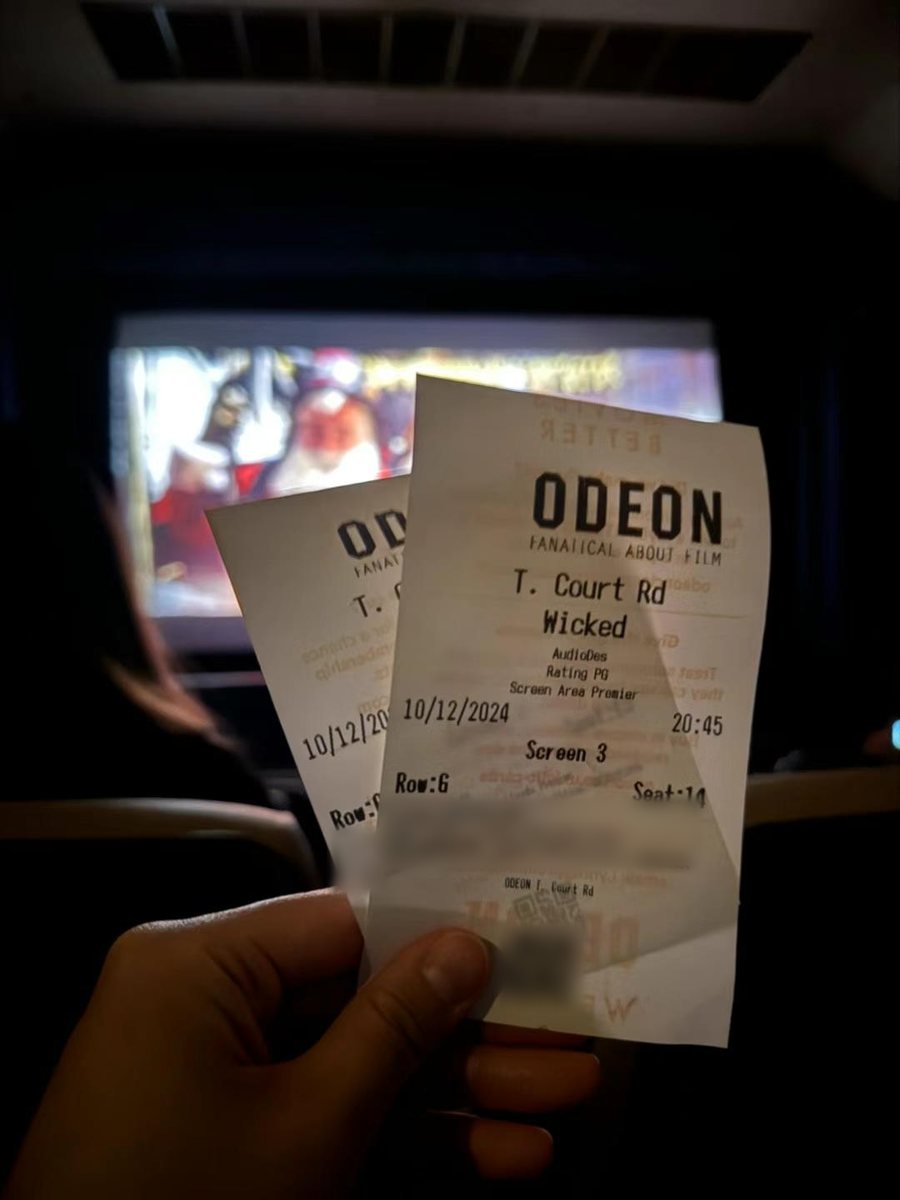
Overall the film is a pleasure to watch, even if it is padded in places. The cinema was less of one: I had bought Premier seats, and the leg room was like an aeroplane’s, which made for an uncomfortable sitting.
RelatedMy review of the stage musical→An aside: more a record of life than a formal review. Image: the tie-in cover of the novel, © the publisher and the film’s rights holders.
 Tianjiao TanProducer and writer. Makes theatre, and sits in the audience for everyone else’s.About me →← All asides